Darknet Markets 2026:
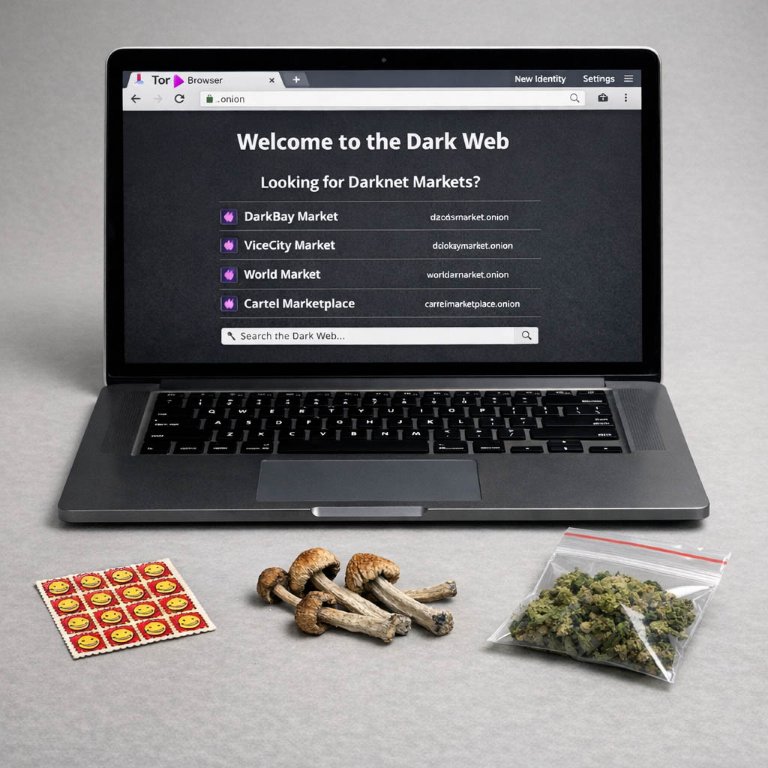
The dark web is part of the deep web but is built on darknets: overlay networks that sit on the internet but which can't be accessed without special tools or software like Tor. Tor is an anonymizing software tool that stands for The Onion Router — you can use the Tor network via Tor Browser.
| Darknet Market | Established | Total Listings | Link |
|---|---|---|---|
| TorZon Market | 2022 | 140+ | Onion Link |
| Nexus Market | 2024 | 600+ | Onion Link |
| Abacus Market | 2022 | 100+ | Onion Link |
| Ares | 2026 | 100+ | Onion Link |
| Cocorico | 2023 | 110+ | Onion Link |
Updated 2026-09-13
A Simple Guide to Safe and Private Shopping on the Darknet
The process of acquiring substances on the darknet is engineered for privacy and operational security. It begins with the use of the Tor Browser, which anonymizes user traffic by routing it through a distributed network. This provides a foundational layer of separation between a user's physical location and their activity on darknet marketplaces.
Accessing a market requires a direct address, often found through updated directories. Upon entry, users create an account secured with a unique username and a strong password. The critical step for transactional anonymity is the use of cryptocurrency wallets, primarily Bitcoin or Monero. Monero offers enhanced privacy through obfuscated transaction details. Funds are transferred from a user's personal wallet to their market account wallet, a process known as depositing into escrow.
Selecting a vendor is a data-driven decision. Markets provide structured feedback systems where buyers rate their experience. Key metrics for vendor evaluation include:
- A high overall rating percentage (e.g., 4.95/5).
- A substantial number of completed transactions.
- Detailed positive reviews mentioning product quality, stealth, and communication.
- Official vendor verification badges issued by the marketplace administration.
The transaction itself utilizes an automated escrow system. When an order is placed, the buyer's cryptocurrency is held in escrow by the market. It is only released to the vendor after the buyer confirms receipt and quality of the product. This mechanism financially incentivizes vendors to fulfill orders as described. Finalizing the order involves providing a secure shipping address, which is encrypted using the vendor's public PGP key, ensuring only the intended recipient can decrypt it.
This integrated systemanonymizing software, cryptocurrency, escrow, and reputation metricscreates a streamlined and secure commercial environment. It reduces traditional risks associated with unregulated commerce by establishing clear protocols for anonymity, financial security, and quality assurance.
A Huge Selection of Drugs on the Darknet
The darknet provides an unprecedented catalog of psychoactive substances, far surpassing the variety typically found in traditional, offline illicit markets. This diversity is a direct function of the platform's global reach and its operational model. Vendors from different geographical regions can list their products, offering everything from common cannabis and MDMA to specialized research chemicals, prescription medications, and refined substances like high-purity cocaine or heroin. The selection is systematically organized, often by substance category, chemical name, or intended effect, allowing for efficient browsing.
This breadth serves several key functions:
- It meets specific consumer demand for rare or regionally unavailable compounds.
- It fosters a competitive environment where vendors differentiate themselves based on product niche, purity, or price.
- It enables consumers to make informed comparisons between similar products from different sources.
The product listings are detailed, typically including:
- Precise chemical nomenclature or common street names.
- Explicit purity percentages, often verified by independent testing.
- Clear photographs of the actual product.
- Weight-based pricing tiers.
How Reviews Make Buying on the Darknet Safer
User reviews form the foundational mechanism for establishing trust and reliability on a darknet market. Unlike traditional commerce, where legal recourse exists, these platforms rely entirely on a self-regulating reputation-based economy. A vendor's long-term success is directly tied to their average rating and the volume of detailed, positive feedback.
The review system is multi-faceted, typically including:
- A star or numerical score for the product and vendor service.
- Mandatory textual descriptions of the experience.
- Separate ratings for stealth, shipping speed, and communication.
- Optional photographic evidence of the received product.
This structure transforms subjective experience into actionable data. Potential buyers analyze reviews not just for praise, but for patterns. Consistent reports of underweight products, slow shipping, or poor communication are clear red flags. Conversely, a vendor with thousands of transactions and a 4.9/5 rating demonstrates proven consistency. The system incentivizes honesty; buyers are motivated to leave accurate reviews to maintain their own standing within the community, and vendors cannot easily manipulate or erase negative feedback. This creates a transparent environment where collective intelligence effectively identifies and promotes high-quality vendors while marginalizing unreliable ones.
How Escrow Makes Darknet Trade Safe and Reliable
Escrow systems form the operational backbone of secure transactions on the darknet, directly addressing the inherent trust deficit in anonymous commerce. These systems function as a neutral third party, holding the buyer's cryptocurrency in a secure account after an order is placed. The funds are only released to the vendor once the buyer confirms satisfactory receipt of the product. This mechanism effectively eliminates the risk of vendors accepting payment without shipping the goods, a practice known as "exit scamming."
The technical implementation is typically automated through the market's platform, creating a transparent and self-enforcing protocol. The process follows a clear sequence:
- The buyer submits an order and deposits funds into the market's escrow wallet.
- The vendor is notified and ships the product.
- Upon delivery, the buyer finalizes the order, triggering the escrow service to transfer the funds to the vendor.
This model incentivizes honest behavior from both parties. Vendors are motivated to provide high-quality products and reliable shipping to secure the release of their funds, while buyers are protected from financial loss. For disputes, most platforms offer a moderated resolution system where market administrators can review communication and evidence before adjudicating the release of escrowed funds. The widespread adoption of escrow has been a primary factor in the professionalization of darknet markets, transforming them from risky ventures into platforms with a predictable and secure economic framework.
How Darknet Markets Ensure Good Product Quality
The verification of product quality is a fundamental operational pillar of successful darknet markets, directly addressing the primary concern of any buyer. This process is systematic and relies on community-driven mechanisms that replace traditional retail assurances. The most critical tool is the vendor review system, where past buyers provide detailed feedback on the product's purity, weight, stealth packaging, and the vendor's communication speed. These reviews are not simple ratings; they are often extensive textual reports that include photographic evidence, creating a transparent and accountable record.
This collective intelligence is further refined by a structured escrow service. Funds for a transaction are held in escrow by the market platform until the buyer confirms satisfactory receipt and quality of the product. This mechanism shifts financial risk away from the buyer and incentivizes vendors to maintain high standards consistently. Only upon the buyer's final release of funds does the vendor receive payment, aligning vendor success directly with customer satisfaction.
To further standardize quality assessment, many markets implement a formalized testing and badge system. Independent testing services, often commissioned by vendor collectives or the markets themselves, analyze product samples. Vendors who submit their products for these independent lab tests and receive positive results for purity are awarded verified badges on their storefronts. This provides an immediate, visual indicator of a vendor's commitment to quality control, allowing buyers to make informed decisions with greater confidence. The entire ecosystem thus functions on a foundation of verified information and secured transactions, minimizing uncertainty for all participating parties.

How Darknet Markets Keep Running Smoothly
The operational resilience of darknet markets is a direct function of their foundational design principles. These platforms are engineered as decentralized networks, often operating on infrastructure like Tor or I2P. This architecture means there is no single server or physical location that can be targeted to disable the entire system. If one node or mirror site is compromised, the network automatically routes traffic through alternative pathways, ensuring continuous service availability. This technical redundancy is the primary layer of their durability.
Beyond infrastructure, resilience is embedded in the economic and social protocols governing transactions. The widespread adoption of multisignature escrow and a robust user review system creates a self-regulating environment. Trust is not placed in a central administrator but is distributed across the community and code. A vendor with a long history of positive feedback builds reputational capital that is both valuable and difficult to falsify. This creates economic incentives for honest conduct, as the potential long-term profit from a good reputation far outweighs the short-term gain from a single fraudulent transaction.
Market models demonstrate significant adaptability in response to external pressures. When one marketplace is shut down, its user base and vendor lists often migrate en masse to a successor platform, a phenomenon known as the "hydra effect." This migration is facilitated by the persistence of communication channels on encrypted forums and the portability of PGP keys for vendor verification. The operational knowledge and security practices are preserved and transferred, allowing new markets to emerge rapidly with improved security features learned from past incidents.
The core servicesanonymity, escrow, and feedbackform a stable triad that reliably meets user demand. This consistency ensures that even as specific market domains change, the underlying model remains intact and functional. The resilience is therefore not of any single website, but of the reproducible market template itself, which can be deployed anew with relative ease as long as the demand for discreet, peer-verified transactions exists.
How Darknet Markets Adapt for Better Service
The operational model of a modern darknet market is defined by its adaptability, a direct response to user demand for security and reliability. This is not a static system; it evolves through iterative improvements based on community feedback and technological advancements. The core service principle shifts from a simple listing platform to a managed ecosystem where vendor performance, product consistency, and transaction safety are continuously optimized.
Markets implement adaptive security protocols such as multi-signature escrow and mandatory PGP encryption, which become standard precisely because users and vendors collectively prioritize them. Vendor shops refine their operations based on detailed review metrics, adjusting shipping methods, stealth packaging, and customer communication to maintain high ratings. This creates a self-regulating environment where superior service is economically rewarded, and substandard actors are systematically filtered out through the review and reputation system.
The service model extends beyond the transaction. It includes:
- Dynamic vendor onboarding processes that verify capability without compromising anonymity.
- Responsive customer support structures that mediate disputes using escrow as a tool.
- Regular software updates to platform infrastructure, patching vulnerabilities before they can be exploited.
This constant refinement cycle ensures the platform's resilience and directly enhances the user experience, providing a streamlined, secure, and predictable service for acquiring verified products. The entire operation demonstrates a pragmatic adaptation to its environment, focusing on sustainable service delivery rather than mere survival.